
What are the future prospects for circuit board assembly technologies?
future prospects for circuit board assembly technologies
The future of circuit board assembly technologies holds great promise, driven by ongoing advancements in materials science, manufacturing processes, and design methodologies. As electronic devices continue to evolve in complexity, performance, and miniaturization, the demand for innovative assembly technologies that offer higher reliability, efficiency, and flexibility is poised to increase significantly.
One of the key trends shaping the future of circuit board assembly is the adoption of advanced materials with enhanced properties. New materials, such as low-temperature solder alloys, conductive polymers, and nanomaterials, are being developed to address challenges related to thermal management, mechanical durability, and environmental sustainability. These materials offer improved performance characteristics, allowing for higher operating temperatures, better electrical conductivity, and increased resistance to environmental factors.
Moreover, additive manufacturing, also known as 3D printing, is poised to revolutionize circuit board assembly by enabling the fabrication of complex geometries and customized designs with unprecedented precision and speed. Additive manufacturing techniques, such as selective laser sintering (SLS) and stereolithography (SLA), offer advantages such as reduced material waste, rapid prototyping, and on-demand production, making them well-suited for the fast-paced and dynamic nature of the electronics industry.
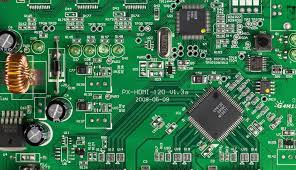
What are the future prospects for circuit board assembly technologies?
Furthermore, advancements in automation and robotics are driving the development of intelligent assembly systems capable of autonomous decision-making, adaptive control, and real-time optimization. Collaborative robots, or cobots, equipped with advanced sensing and vision systems, can work alongside human operators to perform intricate assembly tasks with high precision and efficiency. These technologies not only improve productivity and quality but also enhance workplace safety and ergonomics.
Additionally, the integration of artificial intelligence (AI) and machine learning algorithms is expected to revolutionize circuit board assembly by enabling predictive maintenance, process optimization, and defect detection in real-time. AI-powered systems can analyze vast amounts of data from sensors, cameras, and production logs to identify patterns, anomalies, and optimization opportunities, leading to more efficient and reliable assembly processes.
Furthermore, the emergence of smart manufacturing concepts, such as the Internet of Things (IoT) and digital twins, is transforming the way circuit board assembly facilities operate and optimize their processes. IoT-enabled sensors and connected devices provide real-time visibility into production metrics, equipment status, and environmental conditions, allowing manufacturers to monitor and control assembly processes remotely and proactively identify potential issues before they escalate.
Moreover, digital twins, virtual replicas of physical assets and processes, enable manufacturers to simulate and optimize assembly operations in a virtual environment, reducing time-to-market and minimizing the risk of costly errors. By leveraging digital twins, manufacturers can conduct virtual experiments, predict performance outcomes, and iterate on design and process improvements more efficiently and cost-effectively.
In conclusion, the future prospects for circuit board assembly technologies are promising, driven by advancements in materials science, additive manufacturing, automation, artificial intelligence, and digitalization. These technologies offer opportunities to enhance the reliability, efficiency, and flexibility of assembly processes while enabling manufacturers to meet the evolving demands of the electronics industry. By embracing innovation and embracing these emerging trends, circuit board assembly manufacturers can position themselves for success in a rapidly changing and competitive market landscape.