
How is a flexible printed circuit manufactured?
flexible printed circuit manufactured
The manufacturing of flexible printed circuits (FPCs) involves a series of intricate processes that transform flexible materials into functional electrical interconnects. The journey begins with the selection of an appropriate substrate material, typically polyimide or polyester, chosen for its excellent dielectric properties, thermal stability, and mechanical flexibility. The choice of substrate is critical, as it affects the performance and reliability of the final product. Once the substrate is selected, it is cut to the desired dimensions, serving as the foundation for the circuit.
The next step in the manufacturing process is the application of conductive pathways. This is usually achieved through a technique known as photolithography. In this process, a photosensitive film is applied to the surface of the substrate, which is then exposed to ultraviolet light through a patterned mask. The areas of the film that are exposed to the light become soluble, allowing them to be washed away, while the unexposed areas remain intact. This creates a stencil that defines the layout of the circuit. Once the film is developed, the exposed substrate is subjected to an etching process, typically using a chemical solution that removes the unwanted copper, leaving behind the desired conductive traces.
After the conductive pathways have been etched, the next stage involves the addition of protective layers. These layers are crucial for safeguarding the circuitry from environmental factors such as moisture, dust, and physical damage. The most common protective coating is a solder mask, which prevents solder from bridging between the traces during assembly. Additional coatings, such as conformal coatings, can also be applied to enhance the durability and reliability of the circuit, particularly in harsh operating environments.
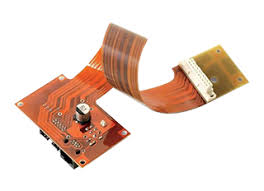
How is a flexible printed circuit manufactured?
Once the protective layers are in place, the flexible circuit can be populated with components. This is achieved through surface mount technology (SMT) or through-hole assembly, depending on the design requirements. In SMT, components are placed directly onto the surface of the circuit and soldered using reflow techniques, which involve heating the entire assembly to melt the solder and create reliable electrical connections. Through-hole assembly involves inserting leads of components into pre-drilled holes and soldering them on the opposite side of the circuit. Both methods require precision and accuracy to ensure that components are correctly aligned and securely attached.
After the assembly process, the flexible printed circuits undergoes rigorous testing to ensure its functionality and reliability. Various tests may be performed, including electrical tests to verify continuity and functionality, and mechanical tests to assess the circuit’s flexibility and durability under stress. These tests are essential to identify any defects or issues before the circuits are integrated into final products.
One of the appealing aspects of flexible printed circuit manufacturing is its capability to produce multilayer designs. In these cases, multiple layers of circuits are stacked together, with adhesive layers bonding them and via holes connecting the conductive pathways across the layers. The manufacturing process for multilayer FPCs involves additional steps of aligning and bonding layers, but it allows for even greater complexity and functionality within a compact design.
The entire manufacturing process for flexible printed circuits is closely monitored to ensure quality and consistency. Advances in automation and manufacturing technology have improved production efficiency, allowing for higher volumes of FPCs to be produced with precision. As demand for flexible circuits continues to grow, particularly in consumer electronics, medical devices, and automotive applications, manufacturers are continually innovating to enhance production techniques, reduce costs, and improve the performance of flexible printed circuits.
In conclusion, the manufacturing of flexible printed circuits is a sophisticated process that combines various techniques and materials to produce highly functional electrical interconnects. From substrate selection and photolithography to component assembly and rigorous testing, each step plays a crucial role in ensuring the quality and reliability of the final product. As technology advances, the manufacturing of flexible printed circuits will continue to evolve, enabling new applications and innovations across diverse industries.