
How do printed circuit board assembly services work?
printed circuit board assembly services
Printed circuit board assembly services play a critical role in the production of electronic devices, and understanding how these services work is essential for anyone involved in the electronics manufacturing process. The primary function of these services is to assemble a printed circuit board (PCB) with various electronic components, creating a functional unit that can be integrated into a final product. The process involves several key steps, each contributing to the overall assembly and ensuring that the board performs as expected.
The process of printed circuit board assembly services begins with the design and fabrication of the PCB itself. Once the design is complete, the manufacturing of the PCB begins. This includes the creation of the actual board, where copper traces are etched to form the electrical pathways, and pads are included to facilitate the attachment of components. After the board is fabricated, it is ready for the assembly stage, where the various electronic components are placed onto it.
printed circuit board assembly services typically employ automated machinery, such as pick-and-place machines, to place the components accurately onto the board. These machines are capable of handling thousands of components in a short period, ensuring high precision and consistency. The components, which may include resistors, capacitors, integrated circuits, and connectors, are picked up from a feeder system and placed on the board according to the design specifications. Some components may be surface-mounted, while others may be inserted through holes in the PCB, depending on the design requirements.
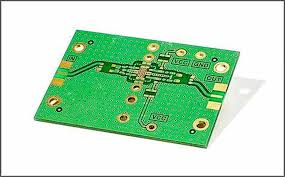
How do printed circuit board assembly services work?
Once the components are placed, the next step in printed circuit board assembly services is the soldering process. Soldering is necessary to create electrical connections between the components and the PCB. There are various soldering methods available, including reflow soldering, wave soldering, and hand soldering. Reflow soldering is commonly used in high-volume manufacturing, where the entire board is heated in a reflow oven to melt solder paste and create permanent connections. Wave soldering, on the other hand, involves passing the board over a wave of molten solder to connect through-hole components. In some cases, hand soldering is used for specialized components or small batches.
After the soldering is complete, printed circuit board assembly services typically include several quality control and testing procedures. These are essential to ensure that the assembled board functions correctly and meets the necessary specifications. Automated optical inspection (AOI) is often used to check for any soldering defects, such as cold solder joints or misaligned components. In-circuit testing (ICT) is another common method used to test the electrical connections and functionality of the assembled board. Functional testing may also be performed, where the PCB is powered up, and its performance is verified under real-world conditions.
Throughout the entire process, printed circuit board assembly services ensure that the final product meets high standards of quality and reliability. Many services also provide additional value-added offerings, such as conformal coating to protect the PCB from environmental damage, programming of microcontrollers, and custom packaging for shipment. These extra services help to streamline the production process and ensure that the final product is ready for use in the intended electronic device.
In conclusion, printed circuit board assembly services involve a series of steps, including component placement, soldering, and testing, all of which contribute to the creation of a functional and reliable electronic product. These services are essential for a wide range of industries, and they ensure that the final product performs as intended, with all components correctly installed and functioning. Through automation, precision, and careful quality control, printed circuit board assembly services help bring electronic devices to life, making them an indispensable part of the electronics manufacturing process.