
How do pcb circuit board assembly contribute to space-saving designs?
pcb circuit board assembly
Printed circuit board assembly is one of the most important processes in electronic design. It’s what brings a blank PCB together with components and resistors, so that it does what the designer intended it to do. It isn’t just a matter of arranging parts; it also involves testing and inspection. Ultimately, the quality of a completed PCB depends on the quality of the parts used. If the wrong components are used, the results can be disastrous. That’s why it is critical to choose reliable suppliers with a history of producing high-quality products.
PCBs have many uses. They are part of the engines in cars, lights in homes and offices, radars on ships and aircraft, and a multitude of medical devices. Some of these devices are very small, including tiny circuit boards that can be used in heart catheters or to monitor blood pressure and blood sugar levels. These highly compact designs require extremely efficient pcb circuit board assembly techniques.
The key step in pcb circuit board assembly is the preparation of the substrate material. Typically, this is a fiberglass-reinforced epoxy laminate, also known as FR-4. It is then coated with copper, which is done through either a chemical or electroless deposition process. This is an essential step because the copper cladding allows for efficient signal transmission and conductivity.
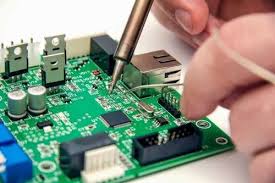
How do pcb circuit board assembly contribute to space-saving designs?
Once the board is prepared, engineers can begin designing it. Using a CAD system and the network connectivity information imported from the schematic, they can arrange component footprints. This is an intricate process, as the smallest details can impact the performance of a finished product. It’s vital to be mindful of areas of excessive heat and electrical noise, as well as physical obstructions.
With the design finalized, the engineer can then send it to a manufacturing company for production. This involves etching the different layers of the board, creating the necessary traces and planes. The resulting “bare” boards are then loaded with the appropriate components, and subjected to a variety of assembly processes.
There are two primary PCB assembly methods: surface-mount technology (SMT) and through-hole technology (THT). SMT is an automated and flexible process that can handle higher connection densities. However, it is not suitable for small devices with fine pitch components. Those require specialized equipment to ensure precise placement and soldering. Regardless of the type of assembly, there are a number of core steps. These include solder paste application, pick-and-place component population, soldering (reflow or wave), and inspection and test.
The pcb circuit board assembly process is complex and requires a highly skilled team. To ensure quality, it’s important to select a supplier with a solid track record of success and continuous improvement in both materials and processes. In addition, a supplier that offers a wide range of services should be able to accommodate all stages of the design process. That way, engineers can focus on developing innovative and cutting-edge designs that will improve the functionality of their products and enhance the lives of their customers.