
How do flex circuits minimize signal interference?
flex circuits minimize signal interference
Flex circuits, or flexible printed circuits (FPCs), have become a vital component in many modern electronic devices due to their ability to be flexible, lightweight, and compact. A key advantage of flex circuits is their capacity to minimize signal interference, which is crucial in ensuring the integrity and performance of electronic systems. Signal interference can disrupt the proper functioning of devices, leading to errors, data loss, or system malfunctions. Flex circuits employ several strategies to reduce or eliminate interference, thereby ensuring reliable signal transmission.
One of the primary ways that flex circuits minimize signal interference is through the use of proper trace routing and shielding. In a traditional rigid PCB, traces may be routed in a linear fashion across the board, leaving them vulnerable to cross-talk or external electromagnetic interference (EMI). In contrast, flex circuits offer greater flexibility in the design, allowing engineers to optimize the trace layout to avoid interference. For example, signal traces can be placed in close proximity to ground traces or power planes, which helps to reduce noise by creating a shielding effect. This technique, known as “grounding,” serves as a protective barrier against external EMI that might otherwise affect signal quality.
Flex circuits are also designed to incorporate multiple layers of conductive traces, which can be utilized to further reduce interference. A multi-layer flex circuit, for instance, may have separate layers dedicated to signal, ground, and power. By using separate layers for these functions, signal traces are effectively shielded from noise originating in other parts of the circuit. The inner layers, often acting as ground or power planes, act as shields that help isolate the sensitive signal traces from external electromagnetic fields. The design of these multiple layers ensures that signals remain clean and unaffected by other components or external sources of noise.
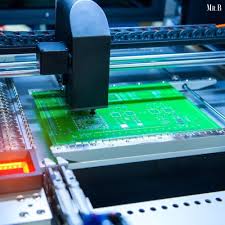
How do flex circuits minimize signal interference?
In addition to multi-layer designs, flex circuit can also use specialized materials to enhance signal integrity. For example, some high-performance flex circuits are made from low-loss materials that reduce signal attenuation and improve transmission speeds. These materials, such as polyimide or PTFE (polytetrafluoroethylene), are particularly beneficial in high-frequency applications, where even slight interference can lead to significant performance issues. By selecting the right materials, flex circuits can maintain a high level of signal fidelity, ensuring that signals remain strong and clear over longer distances or through complex signal paths.
Flex circuits can also employ techniques such as differential signaling to minimize interference. Differential signaling involves the use of two complementary signal traces that carry opposite signals, with one trace carrying a positive voltage and the other a negative voltage. Because the signals are opposite in polarity, any interference that affects both traces equally can be canceled out, resulting in cleaner, more accurate signal transmission. This technique is particularly useful in high-speed digital circuits, where minimizing noise and ensuring fast, reliable communication is essential.
Additionally, flex circuits are often designed with specific considerations for the operating environment. For example, in applications where high electromagnetic interference is present, such as automotive or industrial settings, flex circuits may include built-in shielding layers or special coatings to protect the circuit from external noise. These shields are usually made from conductive materials like copper or aluminum and are placed around the signal traces or across the entire circuit to prevent EMI from penetrating the circuit.
Lastly, the compact and flexible nature of flex circuits also contributes to their ability to minimize signal interference. Because these circuits are lightweight and thin, they can be positioned more effectively within a device to avoid sources of interference. For example, signal traces can be routed along paths that are far away from noisy components, or the entire circuit can be placed inside an enclosure that provides further shielding.
In conclusion, flex circuits minimize signal interference through optimized trace routing, multi-layer designs, the use of low-loss materials, differential signaling, built-in shielding, and their inherent flexibility. These strategies ensure that signal transmission remains reliable and accurate, even in the presence of external electromagnetic interference. As electronic devices continue to shrink and become more complex, the role of flex circuits in maintaining signal integrity will only become more critical.