
How Are PCB Stiffener Different From Rigid PCBs?
PCB Stiffener Different From Rigid PCBs
Printed circuit boards are rigid pieces of material on which components are affixed and connected via races to form an electronic assembly. While this design is a reliable solution for many electronic circuits, advanced applications have caused printed circuit board assembly companies to evolve and develop flexible PCBs. This evolution led to the development of pcb stiffener, which provide additional support and rigidity to flexible and rigid-flex PCBs, improving their reliability.
Stiffeners are used to prevent flexing in a pcb stiffener, which can damage or dislodge components and lead to circuit failures. They can be made from a variety of materials and thicknesses, depending on the application. Some popular options for PCB stiffeners include FR-4, polyimide (PI), and aluminum or stainless steel. These metals offer excellent heat dissipation and superior mechanical properties compared to standard FR-4 glass epoxy laminates, making them suitable for use on certain projects that require higher rigidity in multiple directions.
While a PCB can withstand the majority of physical shocks, vibrations and thermal expansion, a rigid-flex or flex PCB may be subject to significant bending in specific areas due to its physical shape. Stiffeners are used to address this issue by providing additional rigidity and strength in the areas where bending is likely to occur. They can be attached to a PCB using either thermal bonding or pressure-sensitive adhesives, depending on the desired attachment method and environmental conditions.
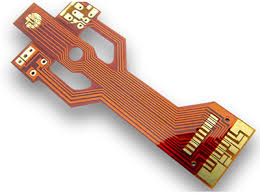
How Are PCB Stiffener Different From Rigid PCBs?
When it comes to selecting a stiffener, manufacturers must consider the material, size and weight, as well as how they will attach to the circuit board. Typically, stiffeners are made from FR-4 glass epoxy laminate, but they can also be fabricated from PI or aluminum/stainless steel. FR-4 is the most common choice, as it offers good electrical and mechanical properties, dimensional stability, and moisture resistance. However, PI and stainless steel offer better chemical resistance than FR-4, as well as superior mechanical properties and heat dissipation.
Choosing the right stiffener thickness is also important, as it will impact how much flexibility and rigidity they offer. The thickness of a stiffener should be consistent throughout the assembly to reduce stress points. As a general rule, stiffener termination points on the top and bottom layers should overlap by at least 0.030″ to alleviate stress. Additionally, it is beneficial to keep the stiffeners the same thickness as the coverlay to simplify fabrication and maintain consistency.
The final step in using a pcb stiffener is sealing them in place. Stiffeners can be sealed to a flexible or rigid-flex PCB using thermal bonding or pressure-sensitive adhesives. PSA is more cost-effective, but it can be unstable in certain environments. Thermal bonding is a more robust option that is suitable for high-stress applications, but it requires specialized equipment.
PCB stiffeners are an integral part of any flex or rigid-flex circuit board, and they should not be ignored when designing a circuit board. By understanding the role they play and how to select the right type for your project, you can ensure that your circuit board is built to last.