
What is SMT Assembly?
SMT Assembly
Smt assembly is one of the most popular ways to assemble printed circuit boards. It’s a process that is highly automated and less susceptible to human error. However, it still requires a high level of skill and understanding of the design specifications for the project in order to produce an end product that meets all of the client’s requirements. This process is widely used in consumer electronics, telecommunications, medical equipment and industrial control systems.
In SMT, components are attached to the PCB surface rather than through them, resulting in a smaller footprint and more efficient design. This is important in the manufacturing of portable devices such as laptops, tablets, and smartphones. In addition, it allows for higher component density which can result in a more powerful and compact device. It’s also much cheaper to assemble SMT than through-hole components because the manufacturing costs are lower.
The first step is solder paste printing, where a stainless-steel stencil is used to “print” a small amount of solder paste onto the pads on which the components will be placed. The paste is applied using a variety of different methods, based on the specific application and product. The next step is solder paste inspection, where a machine is used to evaluate the quality of the printed solder paste. This is done by assessing the conditions of the paste, such as its condition, scraping angle and scraping speed.
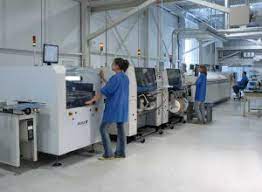
What is SMT Assembly?
Once the printed solder paste has passed inspection, chip mounting begins. This is completed by various machines that differ based on the size and complexity of the components. Larger chips are mounted by high-speed chip mounters, while smaller ones are positioned by a system that may use short pins, leads of various styles, flat contacts or a matrix of solder balls (BGA).
Reflow soldering is the final step in smt assembly. This is done in a special reflow oven that contains temperature zones. The solder will melt when exposed to the appropriate temperature. Once the PCB has been soldered, it must be cleaned through a special cleaning machine to remove traces of toxins and hazardous residues left by the reflow process.
As SMT has become more widely used, many manufacturers have adopted it as their primary method of assembling PCBs. This is due to its increased automation and lower susceptibility to errors, which translates into higher productivity and affordability. However, there are some drawbacks to this technology, such as the fact that it can be difficult to incorporate through-hole components on a SMT board, and that it can be challenging for contract manufacturers to ensure that the products they produce meet all of the necessary design parameters.
The good news is that by working with a skilled and experienced contract manufacturer, these issues can be overcome. SMT assembly is a critical component of most electronic products today, and it’s essential that your contract manufacturer has the expertise to handle the process correctly.