
What materials are commonly used in rigid flex boards?
materials are commonly used in rigid flex boards
Rigid-flex boards represent a convergence of diverse materials meticulously engineered to meet the demanding requirements of modern electronic applications. Understanding the materials commonly used in rigid-flex boards is essential for grasping their unique properties and capabilities. Let’s explore the foundation of rigid-flex technology and the materials that make it possible.
Polyimide (PI), a high-performance polymer renowned for its thermal stability and mechanical strength, is one of the primary materials used in rigid-flex boards. Its exceptional flexibility makes it ideal for the flexible substrates that form the backbone of rigid-flex designs. Polyimide substrates provide the necessary flexibility to accommodate bending and twisting without compromising electrical performance, making them indispensable in applications where flexibility is paramount, such as aerospace and medical devices.
Another commonly used material in rigid flex board is flexible epoxy, often referred to as FR-4. Flexible epoxy combines the durability of traditional FR-4 materials with enhanced flexibility, making it well-suited for flexible substrates in rigid-flex designs. Its ability to withstand bending and twisting while maintaining structural integrity makes it a popular choice for applications where reliability and longevity are crucial, such as automotive electronics and consumer devices.
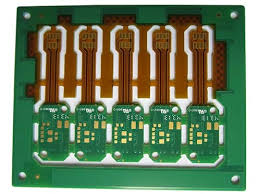
What materials are commonly used in rigid flex boards?
In addition to flexible substrates, rigid-flex boards incorporate rigid materials to provide stability and support to critical components. Fiberglass, typically reinforced with epoxy resin, is a common choice for rigid sections of rigid-flex boards. Fiberglass offers excellent mechanical strength and thermal stability, ensuring that rigid-flex boards can withstand the rigors of demanding environments without succumbing to mechanical stress or thermal expansion. This makes fiberglass an essential material in aerospace, industrial, and automotive applications where reliability is paramount.
Furthermore, copper is an integral material in rigid-flex boards, serving as the conductor for electrical signals. Copper foil is laminated onto the substrate layers to create conductive traces that form the electrical pathways on the board. Copper’s excellent conductivity and corrosion resistance make it an ideal choice for transmitting electrical signals in rigid-flex designs, ensuring robust electrical performance across a wide range of operating conditions. Advances in copper plating techniques have further improved the reliability and performance of rigid-flex boards by enhancing the quality of copper traces and vias.
Additionally, solder mask materials play a crucial role in protecting the copper traces and preventing short circuits in rigid-flex boards. Solder mask is applied over the surface of the board, leaving exposed only the areas where electrical connections need to be made. This insulating layer not only protects the copper traces from environmental factors such as moisture and contamination but also improves the overall reliability and manufacturability of rigid-flex boards by reducing the risk of solder bridging during assembly.
Finally, adhesives are used to bond the layers of flexible and rigid substrates together in rigid-flex boards. These adhesives must be carefully selected to ensure proper adhesion while maintaining flexibility and thermal stability. Common types of adhesives used in rigid-flex board manufacturing include epoxy resins and acrylic-based adhesives, each offering unique properties suited to specific application requirements.
In conclusion, rigid-flex boards leverage a combination of materials, including polyimide, flexible epoxy, fiberglass, copper, solder mask, and adhesives, to achieve the desired balance of flexibility, durability, and electrical performance. By harnessing the unique properties of these materials, engineers can design rigid-flex boards that meet the stringent requirements of diverse electronic applications, from aerospace and automotive to medical devices and consumer electronics.